Crime Cinema
By Yuri Rutman, Writer/Director & Producer, The Violinist (Filmdemand). Educational content only — not investment advice.
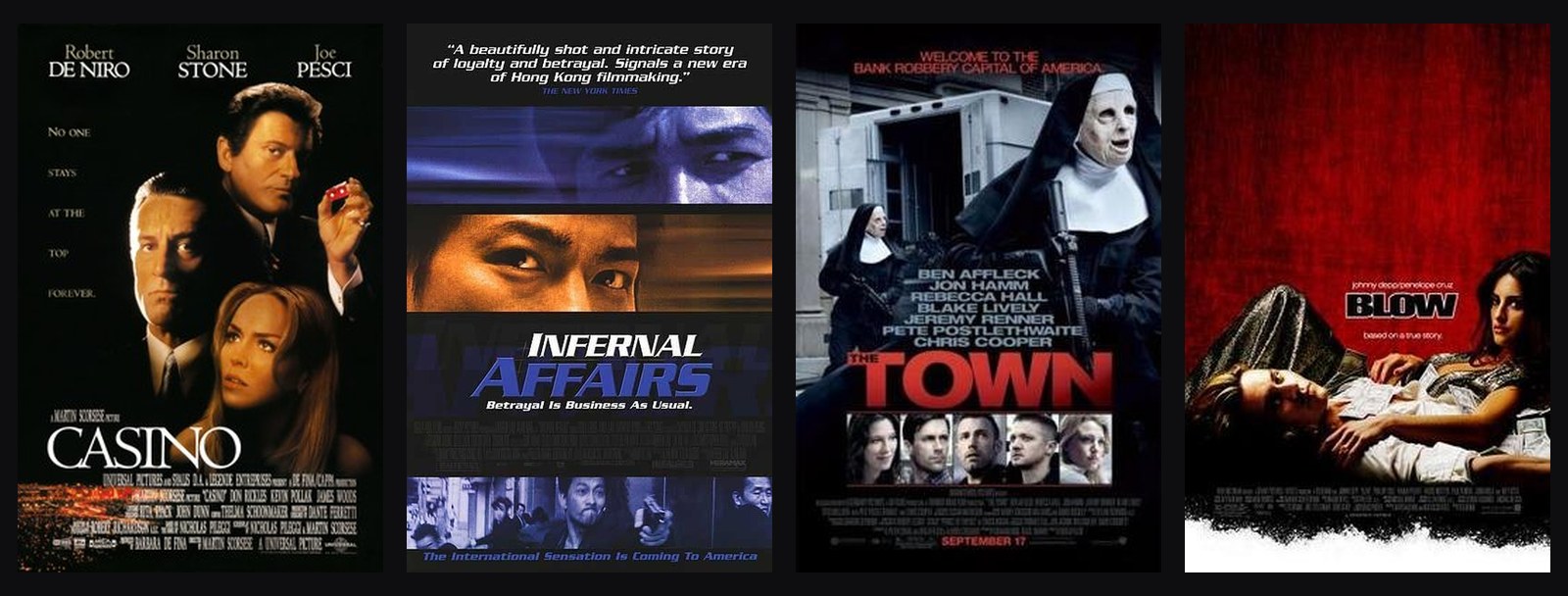
Every Friday night, millions of people open Netflix, Max, Apple TV+, Prime Video and Hulu and ask the same thing: what are the best movies to watch right now?
Maybe it is a sharp crime thriller in the spirit of The Departed, a kinetic mob saga like Goodfellas, or a slow-burn mystery that holds its secret to the last frame. Great films are still among the most powerful cultural forces there are. We read watchlists, argue about endings, quote monologues and rewatch favorites years later.
Few viewers stop during the end credits to ask a different question: who owns this film, and who gets paid every time someone presses play?
What makes a movie worth streaming tonight
Good streaming picks tend to share a few traits, whatever the genre:
A premise you can explain in one sentence. You know within minutes whether it is for you.
Tension that builds. The best thrillers make stopping halfway feel impossible.
Characters with something to lose. Stakes are personal, not abstract.
Rewatch value. The second viewing reveals things the first one hid.
Crime cinema hits all four more reliably than almost any other genre, which is why it dominates "best of" lists. If you want a place to start, our guides to the best crime movies of all time and movies like Goodfellas cover the classics and where they came from.
— theatrical poster, shown for identification and commentary")
Two benchmarks every crime fan knows
Goodfellas (1990) turned the true story of Henry Hill into a template for the modern mob film: voice-over, freeze frames, a soundtrack that dates every scene, and a rise-and-fall arc that still gets borrowed. More than three decades later it remains a regular presence on streaming services and in licensing deals around the world.
The Departed (2006) took a Hong Kong thriller and moved it to Boston, pairing two moles on opposite sides of the law. It won Best Picture and remains one of the most-watched crime films in streaming catalogs. Both films show the same thing: a well-made crime story keeps finding new audiences long after release.
— theatrical poster, shown for identification and commentary")
Inside the streaming licensing business
When you stream an independent crime thriller, you are seeing the last link in a rights supply chain. Streaming services spend heavily every year licensing finished films to keep subscribers from leaving. They cannot produce enough originals to fill their catalogs, so independent films, especially tightly budgeted thrillers, are a steady part of what they buy.
Why do crime and thriller titles keep getting licensed?
Viewers finish them. Platforms watch completion closely, and suspense keeps people watching to the end.
They travel. Loyalty, betrayal, ambition and survival need little translation. A good crime film can play in New York, London, Tokyo, Warsaw and São Paulo.
They age well. Topical comedies can feel dated within a couple of years. Strong crime films become library titles that can be licensed across subscription streaming, free ad-supported services such as Tubi, Pluto and Roku, international TV and airlines for decades.
For a full walkthrough of where a film's money comes from, see how movies make money.
From audience member to owner
For most of film history, studios kept the equity, banks earned interest on the debt, and audiences paid for tickets and subscriptions. Private investors had little direct access.
Today, SEC Regulation D Rule 506(c) lets verified accredited investors invest directly in independent films through private offerings. If you already have an instinct for what makes a movie gripping and rewatchable, that can be a way to own part of one. It is also a high-risk, illiquid investment: many independent films do not recover their costs, and investors can lose their entire investment.
The Violinist: a crime thriller built for this market
The Violinist follows a classical violin prodigy pulled by family debt into the calculating world of Chicago's Eastern European crime underworld. It is designed around the elements that keep crime films in streaming catalogs: tension, atmosphere, and a story rooted in a world audiences rarely see.
Its investment terms are structure statements, not predictions of results:
First-dollar priority. Net receipts from international sales, streaming, and digital rental go to investors until they have received 120% of their invested principal, before producers or talent share in back-end profit. Whether that level is reached depends on the film's sales. See the film revenue waterfall.
A continuing 50/50 split. After the priority level, net profits are split 50/50 between investors and producers for the life of the rights, so later streaming renewals and broadcast licenses run through the same agreement.
Possible Section 168(k) treatment. Qualified film productions may be eligible for 100% bonus depreciation in the year the film is placed in service. Whether an investor can use it depends on their own tax position; a CPA should confirm.
Production incentives. State and international programs commonly rebate or credit a portion of qualified production spending, which reduces the equity the budget needs. Incentives do not protect investors from loss.
Being part of the production. Qualifying investors may receive Executive Producer credit, set visits during principal photography, and premiere and festival invitations, as set out in the offering documents. See investor benefits for how film investing works for accredited investors.
The offering minimum is $50,000, subject to accreditation verification and definitive documents.
Frequently asked questions
What are the best crime movies to stream right now?
Availability changes by country and month, but *Goodfellas*, *The Departed* and other modern crime classics rotate through the major services regularly. Check each service's current catalog.
Who gets paid when I stream a movie?
The streaming service pays a license fee to whoever controls the film's rights in that territory, usually through a distributor or sales agent. That money then flows through the film's revenue waterfall to financiers and profit participants.
Can anyone invest in a movie?
Private film offerings under Rule 506(c) are open only to verified accredited investors. Crowdfunding offerings have different rules and limits.
Is investing in a film safe?
No. Film investment is high risk and illiquid, and investors can lose all of their capital.
If you are an accredited investor, exited founder, family office, or wealth advisor looking for a true alt investment, request the investor briefing for The Violinist.
Request investor materials
Related guides
Educational information only. Not investment, legal, or tax advice, and not an offer to sell or a solicitation to buy any security. Any offering is made only to verified accredited investors through definitive offering documents. Film investing involves substantial risk, including total loss of capital. Statements about Section 168(k) reflect current law; statements about a federal 20% production credit refer to pending legislation that has not been enacted. Consult your own advisors.